
Bringing reproducibility to robotics.
It is an exciting time to work in robotics. There are plenty of interesting challenges in designing machines that intelligently interact with both humans and their environment, and a range of techniques and insights from engineering, computer science, physics, Conference on Robotics and Automation, an annual event organized by the IEEE, is a lively affair over 4,000 participants gathered in Montreal last month for the 2019 instalment of the event to showcase their Inventions, ideas and even artwork. The prominence given to several impressive art installations at the conference can perhaps be taken as a sign that the community feels confident as a multidisciplinary endeavour biomechanics, psychology and other fields are available to help solve them.
However, something is missing in robotics. Most experts are aware of it but aren’t sure what to do about it reproducibility. Frequently, papers report a robot system that accomplishes a certain task with proof-of concept demonstrations. Given the engineering challenges involved, a working demonstration is usually a noteworthy achievement. But how should such results be evaluated and compared with related work in a meaningful way?
One popular approach to develop methods for evaluation in robotics research is to organize competitions, where robot performance can be directly compared against benchmarks and in controlled environments. Competitions have for decades played an important role not just in providing useful benchmarks, but also in finding new directions,
building a community, providing an opportunity for scientists to acquire new skills and especially for young scientists to demonstrate their talents. To highlight the benefits of competitions for individuals as well as whole areas in robotics and AI, Nature Machine Intelligence has started a series of articles called Challenge Accepted written by organizers and participants. See, for instance, the article, Picking the right robotics challenge’, written by the winner of the 2017 Amazon Robotics Challenge 1 Competitions have for decades played an important role not just in providing useful
However, competitions are – after all – competitions, and they cannot replace rigorous experimental research.
For robotics to emerge as a scientific discipline, standards in reporting need to be adopted that focus on reproducibility and replicability. A special issue of IEEE Robotics & Automation Magazine from 2015 on and datasets, as well as code and hardware article format: first, authors can submit their work as a special ‘OR-article’, where R stands for replicable and measurable robotics research argued that a new type of robotics paper is required, namely one that includes a clear description of the methods identifiers 2. Two years later, to give authors a incentive to write and get involved in reproducibility focussed papers, the editors announced three new reproducibility An R-article provides all necessary information methods, data and code for others to replicate the work. This is also an important principle for Nature Research journal articles but presents an interesting challenge in particular for robotics. The second new article format is an ‘r-article’ in which other groups report on their experiences with replicating the work. And finally, the authors of the original R-article can submit a reply This is an exciting initiative, but reproducibility is difficult. Two years onwards, the first R-article has yet to be published. However, this is expected to happen soon, and the hope is that the community gets accustomed to the practice, which will in the long run make reporting, review and replication processes smoother.
Another aspect of transforming robotics into a scientific field is to define what it is that roboticists actually study, a point made eloquently by Signe Redfield in a Comment in this issue. So far, the field has focused too much on physical robot systems, an attitude that dates from the start of ‘nouvelle Al’, a term coined by Rodney Brooks in the early 1990s. Until then, the field of artificial intelligence had been dominated by symbolic approach focused on the goal of giving artificially intelligent systems an internal model of reality. However, Brooks and other experts
pointed out that true intelligence involves functioning in the real world, and not necessarily at human level. Signe Redfield discusses how this vision in combination with pressure from funding sources to come up with real-world solutions, has led to a push for proof-of-concept physical implementations in favour of theoretical research. However, it is now time for a new definition of robotics, one that makes it possible to develop scientific methods for evaluating physical system itself. This would enable results. Redfield proposes a definition of robotics that focuses on the engineering and evaluation of embodied artificial capabilities, rather than the specialization in either theory or experimental realization of capabilities, which in turn would bring benefits for objective and robust evaluation and
comparison.
It is an exciting prospect that robotics can start growing as a scientific discipline, with clearly defined methods of evaluation and measurements in place.
The Idea of building machine learning
The machine learning models works on a constructive feedback principle. You build a model, get feedback from metrics, make Improvements and continue until you achieve a desirable accuracy Evaluation metrics explain the performance of a model. An important aspect of evaluation metrics is their capability to discriminate among model results.
I have seen plenty of analysts and aspiring data scientists not even bothering to check how robust their model is. Once they are finished building a model. they hurriedly map predicted values on unseen data. This is an incorrect approach.
Simply building a predictive model is not your motive. It’s about creating and selecting a model which gives high accuracy on out of sample data. Hence, it is crucial to check the accuracy of your model prior to computing predicted values. In our industry, we consider different kinds of metrics to evaluate our models. The choice of metric completely depends on the type of model and the implementation plan of the model.
After you are finished building your model, these 11 metrics will help you in evaluating your model’s accuracy. Considering the rising popularity and importance of cross-validation, I’ve also mentioned its principles in this article. And if you’re starting out your machine learning journey, you should check out the comprehensive and
popular ‘Applied Machine Learning course which covers this concept in a lot of detail along with the various algorithms and components of machine learning.
When we talk about predictive models, we are talking either about a regression model (continuous output) or a classification model (nominal or binary output). The evaluation metrics used in each of these models are different.
In classification problems, we use two types of algorithms (dependent on the kind of output it creates)
Class output: Algorithms like SVM and KNN create a class output. For instance, in a binary classification problem, the outputs will be either 0 or 1. However, today we have algorithms which can convert these class outputs to probability. But these algorithms are not well accepted by the statistics community
Probability output: Algorithms like Logistic Regression, Random Forest, Gradient Boosting, Adaboost etc. give probability outputs. Converting probability outputs to class output is just a matter of creating a threshold probability, In regression problems, we do not have such inconsistencies in output. The output is always continuous in nature and requires no further treatment
Illustrative Example
For a classification model evaluation metric discussion, I have used my predictions for the problem BCI challenge on Kaggle. The solution of the problem is out of the scope of our discussion here. However the final predictions on the training set have been used for this article. The predictions made for this problem were probability outputs which have been converted to class output assuming a threshold of 0.5.
How to keep safe your pet in COVID-19 Pandemic
SHUBHAM
During the Covid-19 pandemic, most veterinarians are limiting the type of appointments and interaction with their four legged patients. I received an email from my vet and thought, “Now, more than ever I need to keep Raulson extra healthy with these new Covid-19 rules.”
I must have jinxed myself because a few days later I forgot about a bowl of raisins next to the couch. I hate raisins so I pick them out of my trail mix. When I got up, Raulson went in for the kill and ate a good chunk of them before I realized it and stopped him. I felt awful. How could I be so dumb?! Anyways, I digress.
So, I got to experience going to the ER vet in the post Covid-19 world. It’s not something that you want to experience if you can help it. At my local vet, you can’t visit your dog if they are hospitalized and you can’t come into the office what so ever. Raulson was there for two nights and it was horrible.
I deeply respect and appreciate what the vets are doing but that doesn’t take away the fact that it was hard AF to pass Raulson over through my window in an emergency situation. So, keeping your dog out of the vet right now is the best case scenario to avoid all of this.
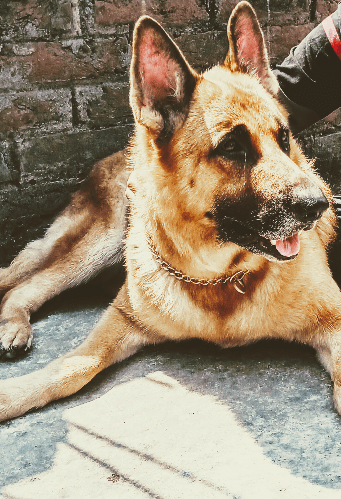
How To Keep Your Dog Safe During Covid-19
I’m going to share some tips to keep your dog safe during the Covid-19 pandemic so that you can avoid an emergency vet visit.
Keep Human Food Away from Your Dog!
I’m super vigilant about keeping food out of reach. Raulson is food driven and will literally try and eat anything and everything. I guess my brain was thinking a million different things given what’s going on right now. I made an honest mistake by leaving the raisins next to the couch. Please learn from my mistake. Keep all the human food away from your dog!
Vacuum on the Regular
This seems pretty obvious but with so much going on right now, it’s easy to forget to do the simple regular tasks. The carpet is another place where dogs can pickup things they shouldn’t be consuming. The kids drop stuff, you track things in on your shoes, etc. Vacuum daily or with some kind of regular schedule to keep the mess to a minimum.
Keep Your Dog Clean
When Raulson got home from the vet, I took him directly to the bath tub as soon as we got home since dogs can possibly carry Covid-19 in their fur. Regular grooming and bathing are a must. If you take your dog to a groomer, they aren’t going to be open right now. Follow up with at-home grooming and regular baths.
Wash Bowls and Bedding
Regularly clean your dog’s food and water bowls, bedding, and toys.
Keep Your Dog Active
Raulson is four years old and has IVDD. He is extremely active and energetic for his age. When you’re on lock down, it’s easy to get stuck on the couch not moving. That is no bueno for your dog’s joints. Keep doing short daily walks and getting in some exercise. This helps not only with your dog’s physical health but their mental health too. Plus, the same for you!
Artificial Intelligence And Me..
SHUBHAM
On a plane thinking of the future of AI .. Artificial Intelligence. What is AI? Machine learning ? If that’s all it is, then we are surrounded by AI. All of Google is one huge AI machine. It can deduce from Data that I put in what I might like .. what I might buy. It can deduce what I might do or want from what I tend do or want over time. Then mirror it against where I live, my age, my ethnic background and over time learn what I tend to do. What are my tendencies.
But that’s the difference. It can only predict my tendencies. But I pride myself in being individual. And if I am, then I can, if I chose to be, be completely random. Act completely randomly. But there is no computer that has the ability to predict randomness. Or be random
For all computers are built on linearity. Even billions of codes, trillions of them, cannot be random. Or predict randomness. Not unless I am so random so often that a computer will be able to predict my tendency to be random.
Act Of Creativity
SHUBHAM
And thats a question I am always asked. What is creativity ? What is the creative act ? What defines you differently from others if you are defining yourself as creative ?
Well .. let me say upfront .. The creative person is not born different. Every child is creative. They satisfy everything that would define creativity. They are constantly observing. They are constantly exploring. They are not taking anything as a given. Everything is new and not prejudiced by experience.
Lets get deeper ..
They do not condition the experience of the now, of this moment by prejudices built upon past experiences. Nor are they projecting the past into the future. The future is to be explored unfettered by memories ..
And most importantly ..
They will take the next step forward .. not knowing what will happen .. if they fall they will still take the next step forward .. how else will they learn to walk ? They are not afraid to explore the unknown ..
Now you may say they need to learn. That the skills they develop over time, to depend on the experiences of the past to project the future are mere survival skills .. or they will constantly skid on the proverbial Banana Peel. Of course.
Yet I could define creative people as those that hold on to that child like quality. Those that that retain an ability to explore the unknown. Those that do not allow the past experiences to prejudice their decision making or their exploration of new ideas, of new thoughts. New discoveries or explorations into new horizons.
We do get called dreamers. We do get called stupid. We do get called impractical ( to the normal world we are). We fall in love all too easily. We chase thoughts and dreams all too easily and like children we fall over and get hurt all the time. But we still chase dreams for they are bigger than the hurt .. I cant imagine a child not trying to walk if it gets hurt a few times ..
We gloss over the practicalities of life and somehow believe that the Universe ( and indeed God, for those of us that believe in it) is on our side .. even if all practical evidence points to the an interpretation that its not !!
So what makes us different .. what makes us (in other people’s eyes) irresponsible .. ? What makes us revel in uncertainty and be provoked by the adventure of the unknown ?
I m sorry…
SHUBHAM
“I’m sorry” carries a lot of weight when it’s genuine. Saying it requires vulnerability to admit wrongdoing and the hurt that that wrongdoing has inflicted on the person you’re apologizing to. To be truly sorry means feeling regret or sorrow over an unfortunate situation and your role in it. But in unhealthy relationships, people often say, “I’m sorry” not to express genuine regret; instead, they use it to manipulate their significant other. In such cases, these words mean something else entirely, including the following five possible meanings and their synonyms.
1. A declaration made out of selfishness

Synonym: I don’t want to feel guilty anymore
I feel guilty because of what happened, and guilt isn’t a good feeling. I’m saying that I’m sorry to make myself feel better, not you.
2. A means to end a dispute that the apologizer would prefer to avoid, often for lack of caring
Synonym: This conversation is over
I’m tired and bored with this disagreement so I’m using these words to end it. I probably don’t believe it or don’t care enough to get to the real issue and so I’ll say this, so you’ll stop pressing for more. It may seem that I’m submitting to your point here, but in fact, I’m using this phrase to avoid doing so.
3. A method of appeasement to control another person
Synonym: I’m in control
I’m telling you what you want to hear not because I mean it, but because I know it will appease you and then allow me to pull your strings as I desire. If I don’t say it, there’s a high likelihood of some outcome occurring that I don’t want to happen—maybe you’ll stop talking to me or leave me home alone while you go out with your friends or break up with me for good. “I’m sorry” is simply a tool I pull out from my toolbox to prevent these things from happening.
4. A phrase designed to elicit an apology from the other party, whereby the original apologizer can deflect full responsibility to that other person; usually said in a hostile or sarcastic tone and often followed by an explicit or implicit “…but this is really your fault”
Synonym: you should be sorry
I wanted to hurt you and I did exactly what I knew would do so. But you started it—like always, you did something to make me upset: you weren’t where you said you’d be, you smiled at that stranger in an overtly flirtatious way, you took too long to respond to my text. Even though you might pretend that you didn’t mean to hurt me, I know that’s a lie. This is really your fault; in fact, you should be apologizing to me.
5. A means of furthering the test of how far the apologizer can push the other person’s boundaries and get away with it
Synonym: I’m testing you
I know what will hurt you and I do it with pleasure. I’m testing you to see what I can get away with—to see what you’ll put up with and what you won’t. “I’m sorry” is just something I say before I do this again—maybe the same exact way, or maybe slightly differently. Don’t worry, over time you’ll become desensitized to this; it will simply be “normal,” and so I’ll continue to push further so I can provoke you to react and keep myself entertained.
The hidden meaning behind any disingenuous “I’m sorry” is the same: I’m not really sorry because you deserve it. This is the lie that manipulators who lavish false apologies spread.
But no one deserves to be harmed, whether physically, emotionally, or with words. If your partner keeps telling you “I’m sorry” and you continue to feel worse, watch their actions. Are they really acting like someone who regrets what they’ve done, or are they doing it again, or maybe in a slightly different way? When it comes to determining if you’re in a relationship with a healthy partner, what they do is more important than what they say.
Love Should Never Be Offered
SHUBHAM
Love sometimes wants to do us a great favor: hold us upside down and shake all the nonsense out.
Ever since happiness heard your name, it has been running through the streets trying to find you.
I wish I could show you when you are lonely or in the darkness, the astonishing light of your own being.
There are different wells within your heart.
Some fill with each good rain,
Others are far too deep for that
Fear is the cheapest room in the house. I would like to see you living in better conditions.
Beyond JAVA 8
SHUBHAM
While most people are still using Java 8 from six years ago, new versions of the language are being released every six months!
The latest Java versions provide an abundance of new features, such as functional programming capabilities, switch expressions, local variable type inference, additions to the Stream API, new factory methods for Collections, text blocks and much more.
With so much content, our Java upgrade should be more than simply the update of a jar file. Our test code no longer has to be as verbose as it once was — this means less code to write and maintain!
The Journey Begins
Thanks for joining me!
Good company in a journey makes the way seem shorter. — Izaak Walton

 Acumen💻